


Corned beef, cabbage, Irish soda bread, Celtic fiddles and step dancing, parades, leprechauns, beer, and the Chicago River dyed green. Wear something green or you’ll get pinched! What do these St. Patrick’s Day traditions have to do with St. Patrick? This celebration of all things Irish truly has little to do with him. But don’t forget about Patrick!
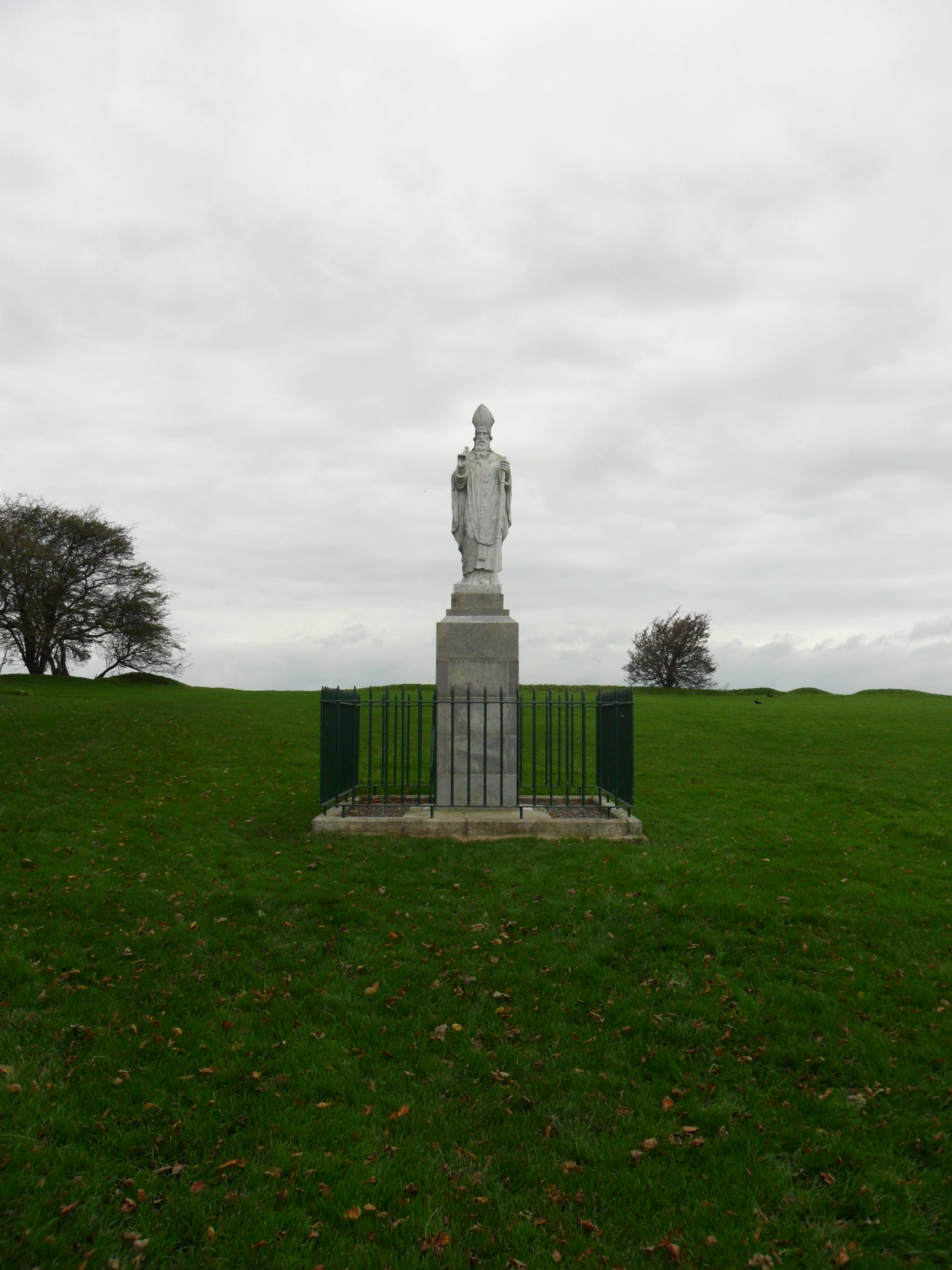
Did he really banish snakes from Ireland? Before you dismiss this myth, remember that truth is often embedded in old stories. A literalistic reading of myths like this often miss the meaning of the story. It can be rightly said that Patrick’s preaching of Christ defeated the darkness of paganism in Ireland and displaced the old gods.
Celtic Paganism
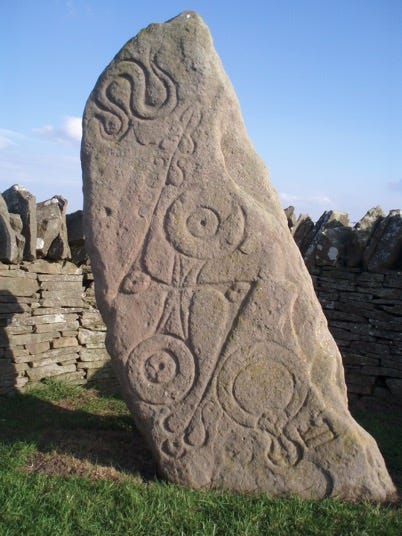
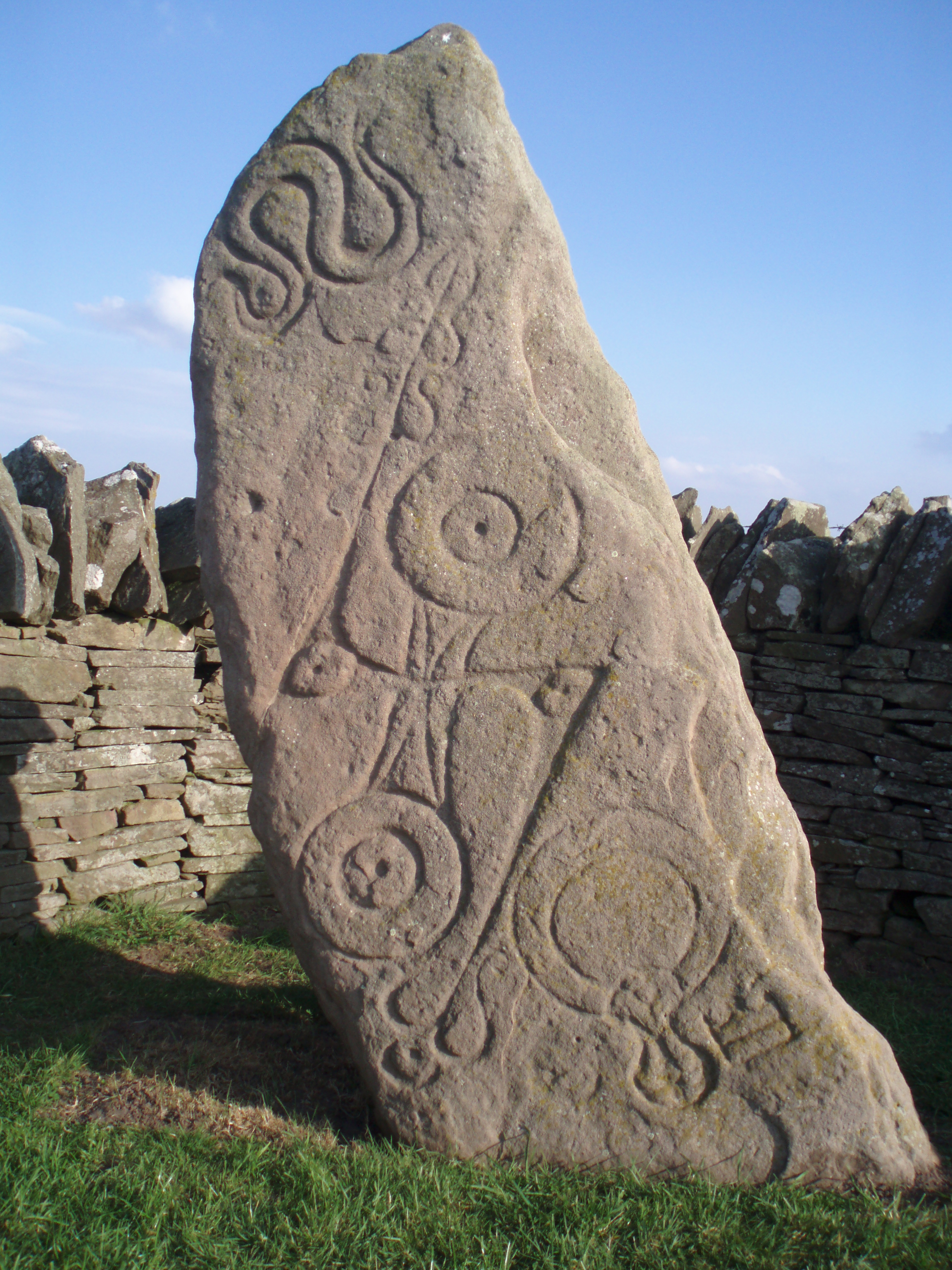
What’s this about snakes? Druids were associated with serpents. You can see this imagery still on runes carved into pagan ruins. Such images were common in Celtic paganism. They were polytheistic, and observed spiritual and supernatural realities in the sun, moon, trees, and rocks. Groves of trees, ancient ruins, stone circles, and tops of hills were described as “thin” places where the veil separating the physical and spiritual world would be lifted.
Tacitus records some details about the Celtic peoples’ paganism and human sacrifices in his reporting on Roman wars in his Annals of Imperial Rome.
“On the shore stood the opposing army with its dense array of armed warriors, while between the ranks dashed women, in black attire like the Furies, with hair dishevelled, waving brands. All around, the Druids, lifting up their hands to heaven, and pouring forth dreadful imprecations, scared our soldiers by the unfamiliar sight, so that, as if their limbs were paralysed, they stood motionless, and exposed to wounds. Then urged by their general’s appeals and mutual encouragements not to quail before a troop of frenzied women, they bore the standards onwards, smote down all resistance, and wrapped the foe in the flames of his own brands. A force was next set over the conquered, and their groves, devoted to inhuman superstitions, were destroyed. They deemed it indeed a duty to cover their altars with the blood of captives and to consult their deities through human entrails.”
From Scotland to Ireland
Contrary to popular belief, Patrick was not Irish, though he is called the “apostle to Ireland.” He was born in Scotland, in Alcluyd, which is modern-day Dumbarton, c. 390. I highly recommend that you read Patrick’s Confession for a first hand account of his life and ministry. Some excerpts are below:
I, Patrick, a sinner, a most simple countryman, the least of all the faithful and most contemptible to many, had for father the deacon Calpurnius, son of the late Potitus, a priest, of the settlement of Bannavem Taburniae; he had a small villa nearby where I was taken captive. I was at that time about sixteen years of age. I did not, indeed, know the true God; and I was taken into captivity in Ireland with many thousands of people, according to our deserts, for quite drawn away from God, we did not keep his precepts, nor were we obedient to our priests who used to remind us of our salvation. And the Lord brought down on us the fury of his being and scattered us among many nations, even to the ends of the earth, where I, in my smallness, am now to be found among foreigners.
And there the Lord opened my mind to an awareness of my unbelief, in order that, even so late, I might remember my transgressions and turn with all my heart to the Lord my God, who had regard for my insignificance and pitied my youth and ignorance. And he watched over me before I knew him, and before I learned sense or even distinguished between good and evil, and he protected me, and consoled me as a father would his son. After I reached Ireland I used to pasture the flock each day and I used to pray many times a day. More and more did the love of God, and my fear of him and faith increase, and my spirit was moved so that in a day [I said] from one up to a hundred prayers, and in the night a like number; besides I used to stay out in the forests and on the mountain and I would wake up before daylight to pray in the snow, in icy coldness, in rain, and I used to feel neither ill nor any slothfulness, because, as I now see, the Spirit was burning in me at that time.
Therefore, indeed, I cannot keep silent, nor would it be proper, so many favours and graces has the Lord deigned to bestow on me in the land of my captivity. For after chastisement from God, and recognizing him, our way to repay him is to exalt him and confess his wonders before every nation under heaven.
After escaping slavery in Ireland, he returned to his homeland, was reunited with his family, and trained for ministry. He then returned to Ireland to bring the gospel to those who had previously enslaved him.
Letter to Coroticus
Patrick’s second surviving work is his Letter to Coroticus. This letter is a rebuke of the villainous king Coroticus whose soldiers had massacred some of his church members and taken others away into slavery. Patrick wrote to pronounce excommunication on those soldiers, as well as to call for the release of his church members. We do not know the outcome of this story.
Confronting Paganism at Slane Hill
A pagan festival was held at Tara, and during this festival, no fires would be kindled elsewhere, until the High King Laoghaire of Ireland lit a flame on this pagan hill. One writer from the 600s recounted: “The custom was that whoever lit a fire before the king on that one night of the year – Easter’s Eve – would be put to death.” Patrick saw this as an opportunity to confront paganism, and on Saturday evening before Easter Sunday, he lit an offending bonfire on Slane Hill which was easily visible to those at Tora from ten miles away. The king sent his soldiers to seize Patrick, and after an interview and hearing of Christ, he granted him permission to preach in that area.
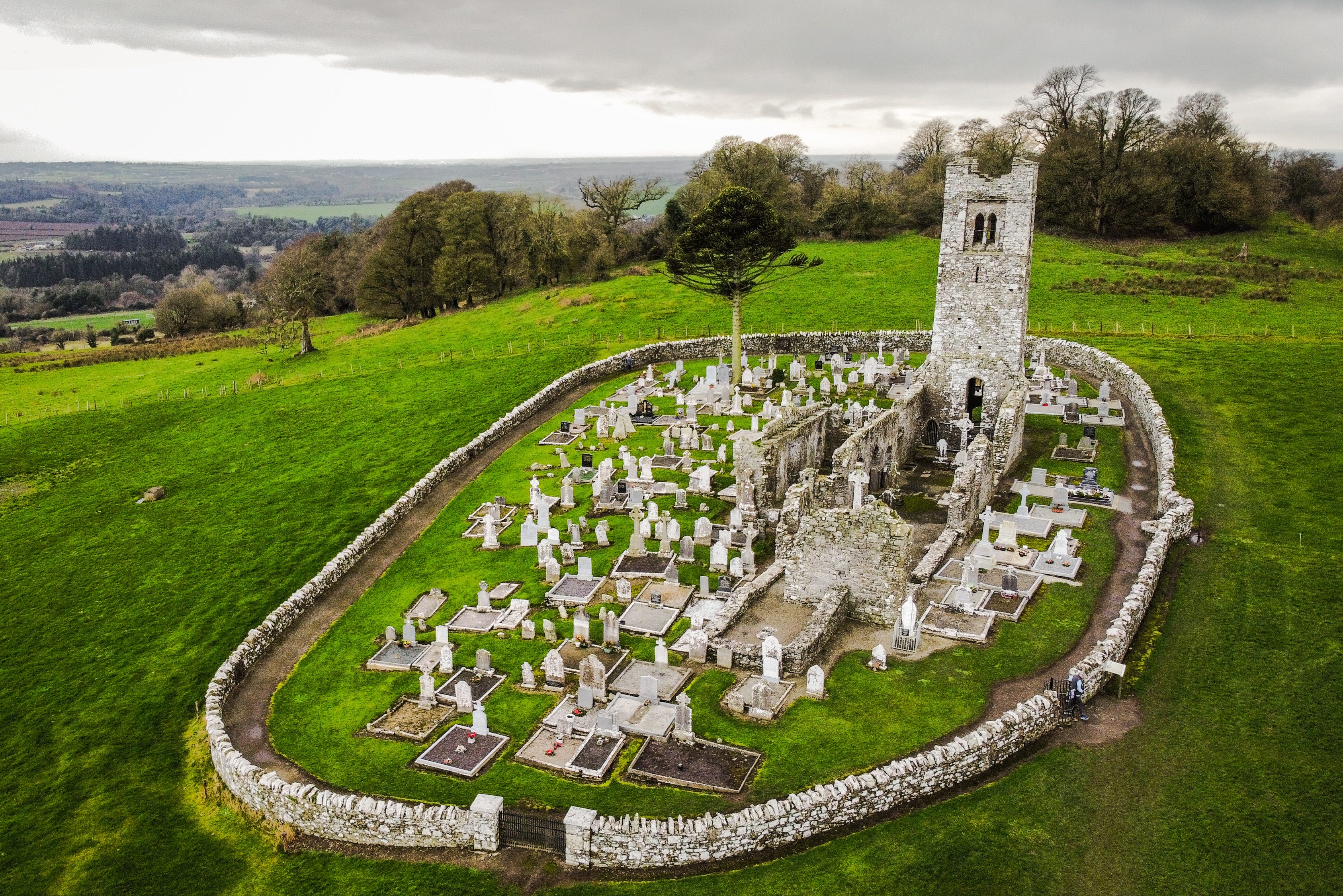

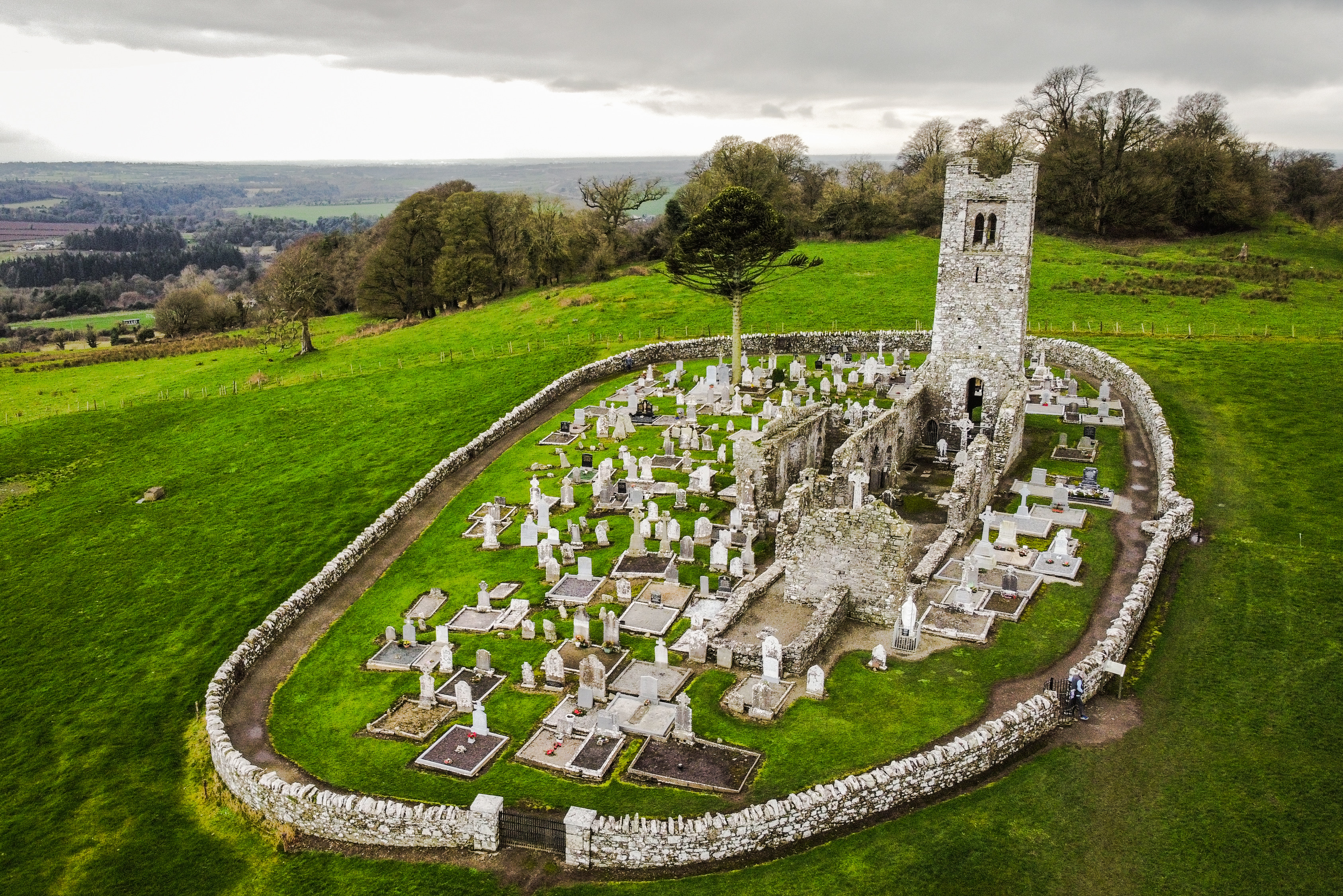
It’s a bit of trivia, but Slane Hill is also the name of the ancient Irish melody used for our hymn Be Thou My Vision.
Life and ministry in Ireland was fraught with danger. Patrick wrote “daily I expect to be murdered or betrayed or reduced to slavery if the occasion arises. But I fear nothing, because of the promises of Heaven; for I have cast myself into the hands of Almighty God, who reigns everywhere.”
Other times he was robbed and imprisoned. “They seized me with my companions, and that day most avidly desired to kill me. But my time had not yet come. They plundered everything they found on us anyway, and fettered me in irons; and on the fourteenth day the Lord freed me from their power, and whatever they had of ours was given back to us for the sake of God on account of the indispensable friends whom we had made before.”
Patrick’s Theology
Read the following excerpts of Patrick’s Confession and you will see one who believed in salvation by grace, and one who affirmed the Nicene Creed and the doctrine of the Trinity.
On Grace
“I know for certain, that before I was humbled I was like a stone lying in deep mire, and he that is mighty came and in his mercy raised me up and, indeed, lifted me high up and placed me on top of the wall. From there I ought to shout in gratitude to the Lord for his great grace in this world and forever, that the mind of man cannot measure.”
On the Trinity
For there is no other God, nor ever was before, nor shall be hereafter, but God the Father, unbegotten and without beginning, in whom all things began, whose are all things, as we have been taught; and his son Jesus Christ, who manifestly always existed with the Father, before the beginning of time in the spirit with the Father, indescribably begotten before all things, and all things visible and invisible were made by him. He was made man, conquered death and was received into Heaven, to the Father who gave him all power over every name in Heaven and on Earth and in Hell, so that every tongue should confess that Jesus Christ is Lord and God, in whom we believe. And we look to his imminent coming again, the judge of the living and the dead, who will render to each according to his deeds. And he poured out his Holy Spirit on us in abundance, the gift and pledge of immortality, which makes the believers and the obedient into sons of God and co-heirs of Christ who is revealed, and we worship one God in the Trinity of holy name.
On Pagan Worship, Eternal Life, and Judgment Day
For the sun we see rises each day for us at [his] command, but it will never reign, neither will its splendor last, but all who worship it will come wretchedly to punishment.
We, on the other hand, shall not die, who believe in and worship the true sun, Christ . . . but will abide for ever just as Christ abides for ever, who reigns with God the Father Almighty and with the Holy Spirit before the beginning of time and now and forever and ever. Amen.
Love for Ireland
Patrick loved Ireland and spend the remainder of his life on that island. He prayed that he would be allowed to stay with the church in Ireland, and that he would finish well: “May it never befall me to be separated by my God from his people whom he has won in this most remote land. I pray God that he gives me perseverance, and that he will deign that I should be a faithful witness for his sake right up to the time of my passing.”
An Ireland Freed from Paganism
Patrick is believed to have died on March 17, 461. When we celebrate St. Patrick’s Day, let us remember God’s work of grace to save the people of Ireland from paganism. Patrick marveled at this grace: “How is it that in Ireland, where they never had any knowledge of God but, always, until now, cherished idols and unclean things, they are lately become a people of the Lord, and are called children of God?”