


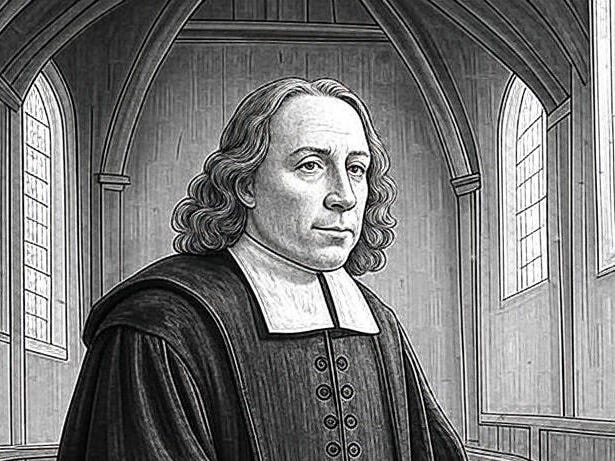
Thomas Doolittle (1630-1707) is a lesser known Puritan and Nonconformist who is worthy of rediscovery, and we would do well to learn from his example of faithfulness and his love for Jesus in turbulent times.
Early Life
Born in Kidderminster, Worcestershire, Doolittle grew up and came to faith under the preaching of Richard Baxter. While working as a lawyer’s assistant, he was required to copy documents on the Lord’s Day. This brought about a crisis of conscience which resulted in him leaving his employment and ending his prospects of a legal career, but he did so in order to give the day to worship the Lord.
Education, Marriage, and Beginnings of Pastoral Ministry
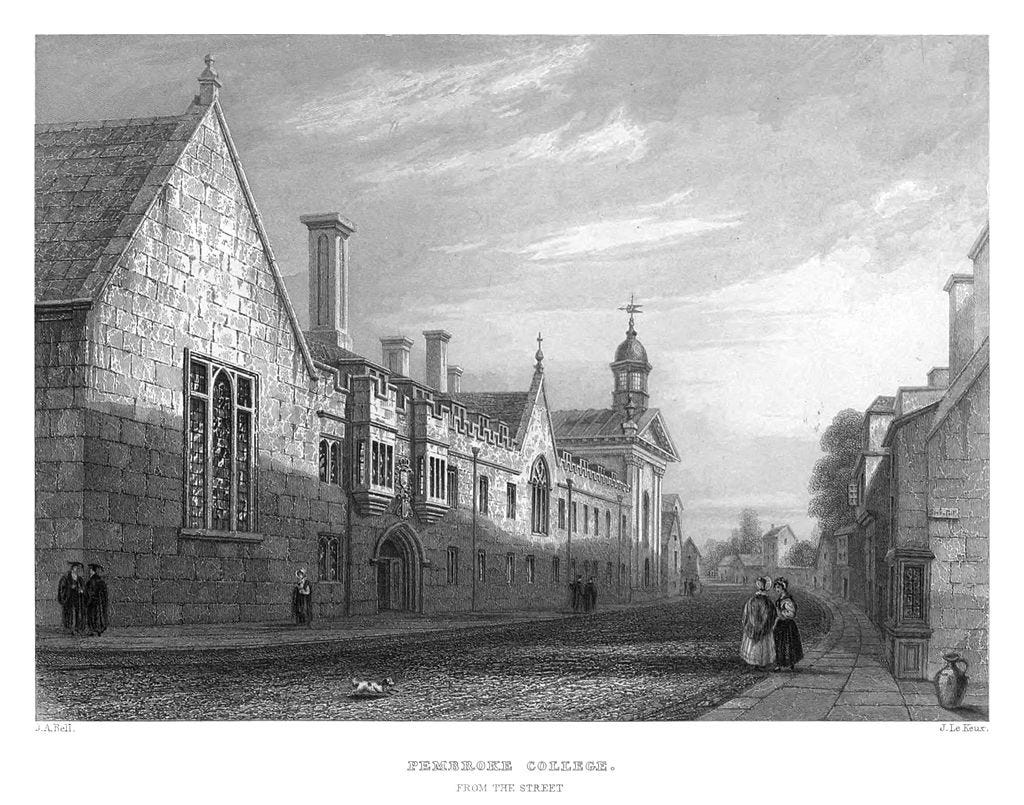
Baxter encouraged him to consider pastoral ministry, and at age 17, he enrolled at Pembroke College in Cambridge where he went on to complete two theology degrees. At age 23, he got married, began his first pastorate at St. Alphage, London Wall, and began work on his second degree at Cambridge. Over the next nine years Doolittle continued in ministry, finished school, he and his wife Mary had three children, and Mary was pregnant with their fourth.
From the Pulpit to the Boarding School
A political crisis followed Oliver Cromwell’s death in 1658. Cromwell’s son Richard was unable to serve effectively as Lord Protector and went into exile, and Charles II returned to and took his father’s throne in 1660. The Clarendon Code pivoted the Church of England away from Reformed theology and congregationalism, and restored episcopacy. On August 24, 1662, the Act of Uniformity was passed by Parliament and Charles II. This stripped away religious liberty that had previously been enjoyed due to the English Civil War and Cromwell. Clergy were required to submit to the Book of Common Prayer and other dictates from Parliament and the king.
After prayerful consideration, Doolittle, along with over 2,000 pastors throughout England, refused to submit their theology and ministry to the state. Christ alone is King over the Church. This event is known as the Great Ejection. For Doolittle, this meant not only the loss of his employment, but it also put himself, his pregnant wife, and their three children out of their home which had been attached to the church.
With financial support from others, he opened a new home as a boarding school. Preaching without a license would result in arrest. Persecution from the state continued with the Conventicle Act in 1664, which prohibited the gathering of five or more persons who were not part of the same household for worship.
Plague, Fire, and Persecutions
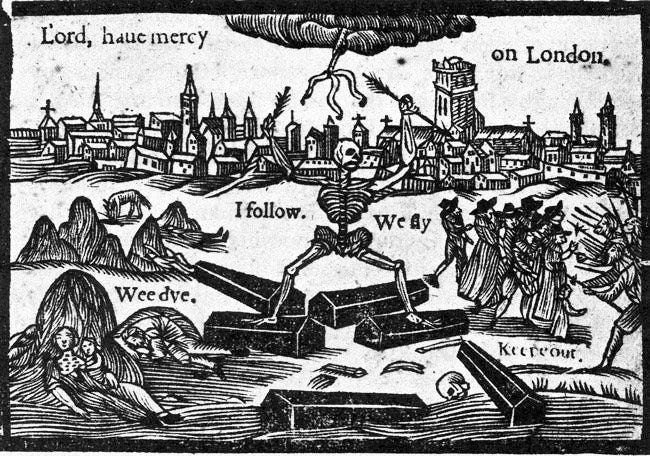
In 1665, the plague struck. Doolittle and his family survived the plague. Most clergy appointed after the Great Ejection fled their places of ministry. The crisis created a vacuum, and Thomas Vincent, one of the teachers who worked in his boarding school, went into London and preached publicly and boldly throughout the epidemic. Many Nonconformists followed his example, and the state declined to persecute them during this tumultuous season.
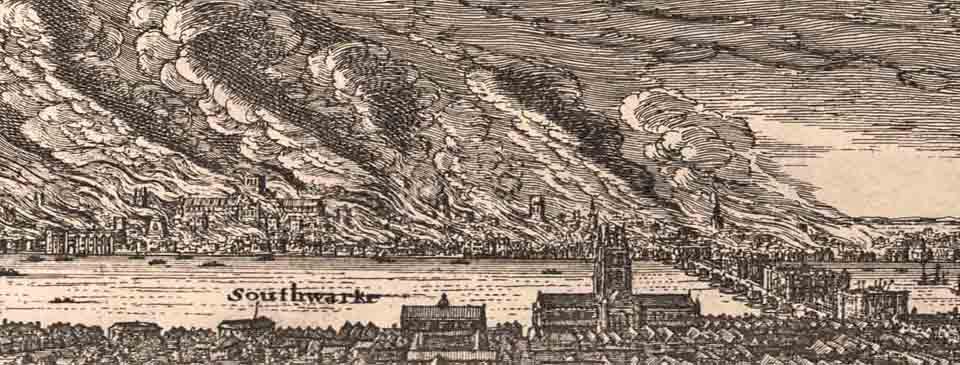
The following year, in 1666, London burned. Convicted of the need for faithful churches, he partnered in the construction of a meeting house to hold a new church in London, where he and Thomas Vincent pastored together. The congregation grew, and they moved to a larger meeting house. London was being rebuilt, the times of crises had passed, and persecution restarted. Midnight on a Saturday, soldiers broke down his door to arrest him for preaching, and he escaped over a wall into a neighbor’s house.
Vincent and Doolittle refused to heed a warning from the mayor of London, and continued to preach. Word spread that soldiers were coming to arrest Doolittle at the next worship service, and a friend insisted on preaching in his place. Soldiers barged into the worship service, announcing, “Stop, in the King’s Name.” At this, the preacher cried out, “In the name of the King of kings, do not disturb his worship.” The soldiers were commanded to open fire, and the preacher escaped in the commotion. The pulpit was pulled down, and the doors barred. Gathering for worship would once again return to secret meetings.
In 1672, Charles II granted an “indulgence” that allowed for Doolittle to begin public preaching once more. He relocated his family and began pastoral ministry once more, only to have this freedom rescinded. This was followed by another two moves and the confiscation of his family’s possessions.
Return to London
Persecution ended following William and Mary’s Glorious Revolution of 1688. The Act of Toleration was passed in 1689, allowing Doolittle to return to the meeting house that he and Vincent had opened in London. He pastored there until his death in 1707.
Doolittle’s career is not marked by a lengthy ministry in any one place, or by any bestselling title. Instead, his ministry career was marked by great difficulty in a turbulent period and he is little known today. You may, however, be familiar with some of his students, among whom were Matthew Henry and Edmund Calamy.
Love for Jesus
About twenty published works survive from Doolittle’s ministry. His writings are very practical and evangelistic with a focus on spiritual life, family life, and evangelism. As a starting point, I recommend Love to Christ Necessary to Escape the Curse at his Coming (1693)1 If the full text is a bit much, I recommend you read through the excerpted “Motives to Love Jesus” posted at A Puritan’s Mind.
Read this excerpt below:
This holy love therefore being the choicest, chief love — supposes Christ to be the choicest, and the chief good.
That he is a good Savior, a good Redeemer, a good Lord and Master; a good excelling, transcending all inferior . . . good; good! not only good, but best — best in himself, and best for us!
And because he must be loved with such a love, as that we are willing at his call to part with all other good for his sake — therefore he is looked upon, and loved as a universal good.
Whereas riches, honors, friends, and all things of this world are but particular good — no one thing is good for all things. Food and drink are good to satisfy your hunger and thirst — but not to clothe you. Clothes are good to cover you, but not to feed you, etc.
But the soul whose love is fixed upon Christ, sees and says:
In poverty, Christ will be my riches,
in disgrace, Christ will be my honor,
in bonds and imprisonment, Christ will be my liberty,
in pain, Christ will be my comfort,
in death, Christ will be my life,
in the loss of all things, Christ will be better to me than the enjoyment of all these things!
He who does not love Christ as an incomparable object — does not love him as he ought.
“Whom have I in Heaven but you? And earth has nothing I desire besides you. My flesh and my heart may fail, but God is the strength of my heart and my portion forever!”
Doolittle knew these realities quite well. Though he had lost much for the sake of Christ, he rejoiced to love Jesus. May the same be true for us.
Thomas Doolittle, Love to Christ Necessary to Escape the Curse at his Coming (London, 1693).